
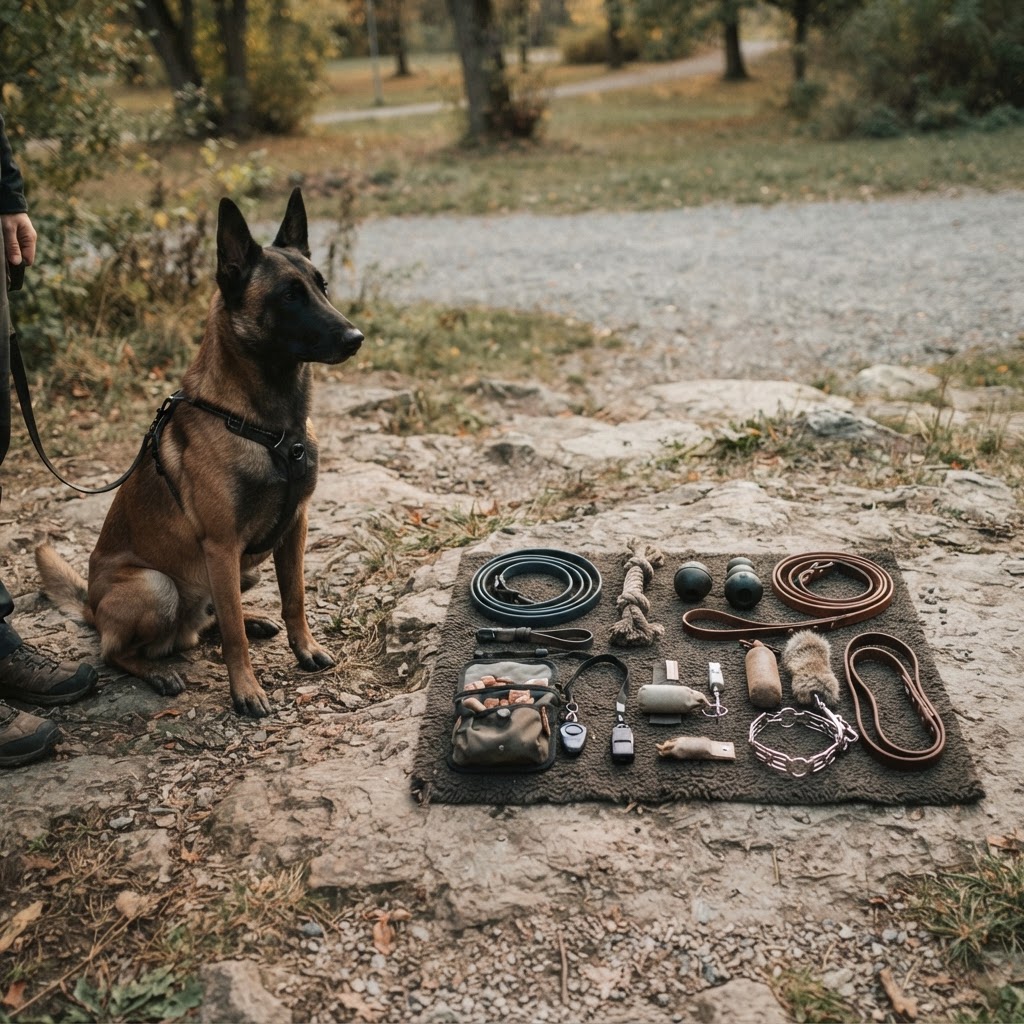
Training Equipment
Clickers
Also known as: clicker training, dog clicker, training clicker, marker clicker, mechanical marker
A clicker is a small mechanical marker that produces a consistent sound to identify the exact moment a behaviour earned reinforcement. It can sharpen timing and clarity, but it has no built-in meaning until conditioned and never replaces reinforcement or clear training criteria.
Want The Academy to remember what you've researched? Learn About Membership
At a Glance
- Tool type
- Mechanical behaviour marker
- How it works
- A consistent sound marks a precise moment
- Must be
- Conditioned — paired with reinforcement first
- Rule
- One click per marked moment, then deliver the reward
- Styles
- Handheld or wearable clickers
- Watch for
- Sound sensitivity, volume, accidental clicks, noisy settings
- Not a substitute for
- Reinforcement, timing, or clear criteria
- Risk if misused
- Low
What It Is
A clicker is a small handheld or wearable device that produces a brief, consistent sound when pressed. It is a mechanical marker — a signal that identifies a precise moment in behaviour. It is distinct from a verbal marker, which is a spoken word; from a release cue, which ends a behaviour; from praise, which is general approval rather than a precise marker; from a recall cue, which summons the dog; and from an interrupter, which stops an ongoing action. The clicker's value is consistency: the same sound every time.
Primary Purpose
The purpose is to mark the exact behaviour that earned reinforcement, so the dog can identify which action produced the reward. A clicker can improve timing when teaching small movements, shaping new skills, or working at a distance. It does not teach the behaviour by itself and has no built-in meaning — the click must first be conditioned by pairing it with reinforcement until the dog understands what it predicts.
How It Is Commonly Used
The handler conditions the click by repeatedly clicking and immediately delivering a reward, so the sound becomes a predictor of reinforcement. Once conditioned, the click marks one clear moment of behaviour, and the reward follows. The click is a terminal marker — it identifies the behaviour that earned the reward and is followed by reward delivery. Consistency matters: one click per marked moment, then follow through with the promised consequence. Some handlers keep the clicker permanently; others fade it once timing and criteria are established and rely on a verbal marker.
When It May Be Useful
- Shaping new behaviours in small increments
- Marking precise moments where timing matters
- Working at a distance where a verbal marker might be unclear
- Teaching small movements or position changes
- Environments where a consistent, distinct sound helps clarity
Advantages
- A consistent, distinctive sound that is easy to time precisely
- Useful for shaping and distance work
- Separates the mark from the handler's emotional tone
- Can be faded once the skill is established
Limitations
The click has no meaning until conditioned, and it never replaces the reinforcement that follows it. Repeated clicking without reward, clicking at the wrong time, or using the click to get attention weakens clarity. Sound sensitivity varies — some dogs find the click startling, and volume differs between clicker designs. In noisy environments the click may be hard to hear, and with multiple dogs one click can mark the wrong animal. A clicker also occupies a hand, adding to handler mechanics.
Setup and Introduction
Condition the click in a low-distraction setting: click, then immediately deliver a reward, repeated until the dog orienters to the sound expecting reinforcement. Choose a clicker volume suited to the dog — quieter designs exist for sensitive dogs. Practise the physical mechanics without the dog so the click happens at the intended moment, not after. Introduce the clicker to one behaviour at a time before adding complexity.
Safe and Effective Use
Click one clear moment, then deliver the reward — do not click repeatedly without following through. Watch for sound sensitivity; if the dog startles, lower the volume or choose a quieter marker. Avoid accidental clicks, which mark unintended behaviour. In multi-dog settings, mark only the intended dog. The Academy is method-flexible. This tool may be used within reward-based, balanced, mixed, or trainer-directed systems. No single marker or tool is required for all teams, and members may use the methods and equipment they are comfortable and competent with.
Signs the Tool Is Creating Confusion
- The dog startles at or avoids the sound
- The dog offers many random behaviours after each click
- Behaviour worsens or stalls despite repeated clicking
- The dog focuses on the clicker hand rather than the lesson
- Accidental clicks mark the wrong moment
Situations Where Another Option May Be Better
- Sound-sensitive dogs, where a verbal marker may be gentler
- Noisy environments where the click is hard to hear
- Multi-dog homes where clicks cannot be directed precisely
- Handlers whose hands are already full, where a verbal marker is simpler
Cleaning, Storage and Maintenance
Clickers have few moving parts, but inspect the button and spring for wear. Keep the clicker clean, especially if worn near food handling. Store where it will not be pressed accidentally. Replace a clicker whose sound becomes inconsistent or whose button sticks.
Common Mistakes
- Clicking without following through with reinforcement
- Clicking late or at the wrong moment
- Using the click to get the dog's attention rather than to mark behaviour
- Ignoring sound sensitivity or volume
- Treating the clicker as the source of learning rather than the reinforcement
Questions to Ask Before Buying or Using
- Is the volume suited to my dog's sensitivity?
- Do I want a handheld or wearable design?
- Can I manage the clicker alongside my other equipment?
- Do I have a plan to condition the click before using it?
- Will I keep the clicker long-term or fade it once timing improves?
Practical Academy Takeaway
A clicker is a precise, consistent marker that can sharpen timing and clarity — but only after it is conditioned and only when followed by reinforcement. It does not replace reward delivery, clear criteria, or good timing. Use it where precision helps, watch for sensitivity, and feel free to keep or fade it as the team develops.
Educational Limitation
This guide is educational and method-flexible. Clicker use is one option among several marker systems. For dogs with sound sensitivity or specific behavioural goals, a qualified trainer can help tailor the approach.
Academy Connections
Understanding this gear can also help you understand...
Every gear guide connects to other departments across The Academy.