
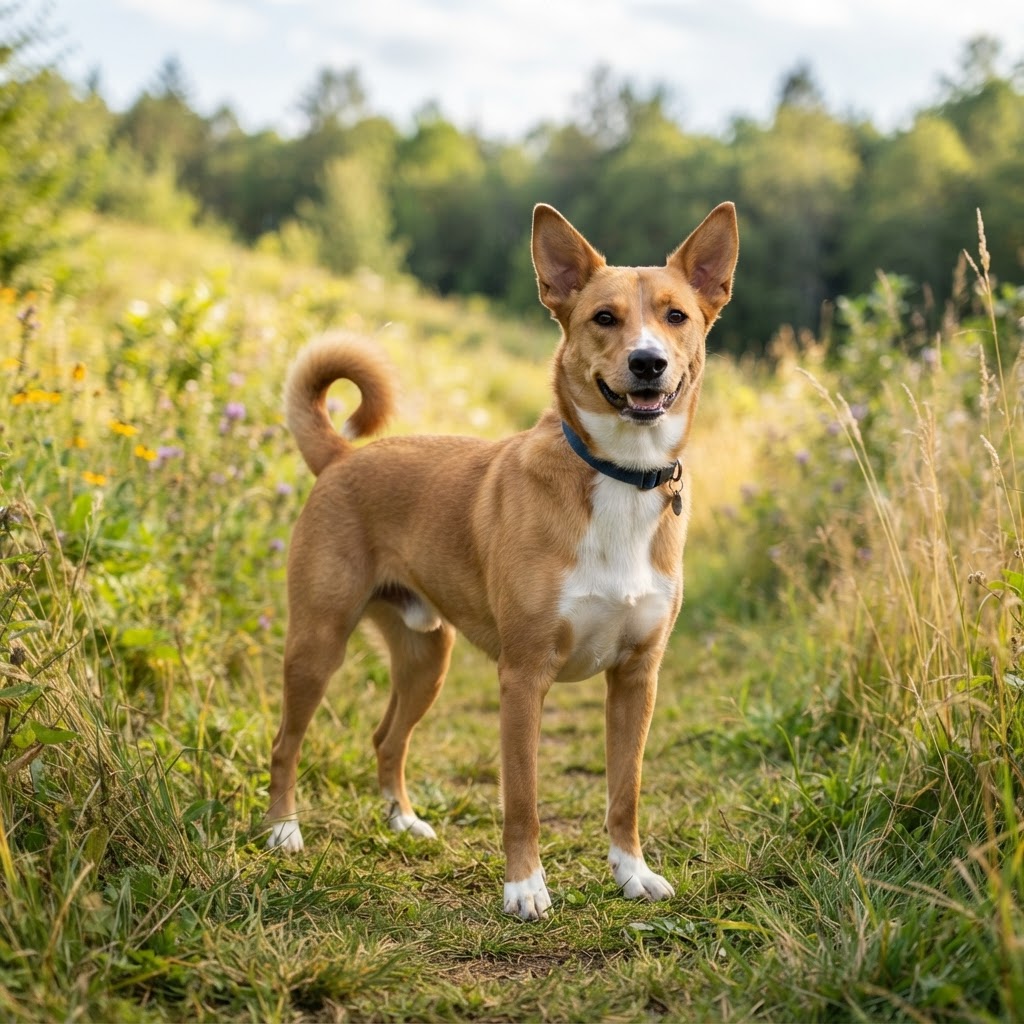
Individual Assessment · Mixed Breeds
Mixed-Breed Dogs
Also known as: Mixed breed, Crossbreed, Designer breed, Mutt
A mixed-breed dog may combine physical and behavioural tendencies in ways that cannot be predicted from appearance alone. Evaluate the individual dog — appearance may offer clues, but history, development, health, environment and observed behaviour matter more than visual guesses or designer-cross labels.
Want The Academy to remember your breed research? Learn About Membership
Quick Facts
Best Suited For
People open to individual assessment
Exercise
Varies by individual
Grooming
Varies by coat type
Shedding
Varies by coat type
Trainability
As trainable as any dog; assess the individual
Experience Level
Varies — some individuals suit first-time owners, others need experience
At a Glance
At a Glance
- Original purpose
- Varies by individual
- Country / region of origin
- Worldwide
- Height range
- Varies widely
- Weight range
- Varies widely
- Life expectancy
- Varies — typically 10–15 years depending on size and health
- Coat type
- Varies — short, medium, long, curly, or wire
- Recognized colours
- All colours and patterns possible
- Exercise commitment
- Varies by individual
- Mental-work commitment
- Varies by individual
- Training commitment
- Varies by individual
- Grooming commitment
- Varies by coat type
- Shedding tendency
- Varies by coat type
- Best suited to
- People open to individual assessment and some uncertainty
Ranges and tendencies vary by sex, line, registry, and individual dog. Descriptive labels are used instead of scores or rankings.
Original Purpose
Original Purpose
Varies by individual — companionship, work, or sport depending on the dog
What People Often Love
What People Often Love
- Individuality and unique appearance
- Variety in size, coat, and personality
- Rescue and adoption availability
- Potential for genetic diversity in some individuals
- Unique combinations of traits
- The reward of getting to know an individual dog
What Can Be Difficult
What Can Be Difficult
- Uncertain adult size for puppies
- Unpredictable coat type and grooming needs
- Unknown history, early development, or health background
- Inaccurate breed labels, particularly in shelter settings
- Difficulty predicting behavioural tendencies from appearance
- Potential for inherited health conditions from parent breeds
- Variable energy levels and training needs
- Some individuals may have unknown trauma or behavioural history
- Designer-cross labels do not guarantee predictable traits
Life Stages
Life stages
Puppy
Mixed-breed puppies offer less predictability than purebred puppies — adult size, coat, and temperament may be uncertain. DNA testing may provide ancestry guidance but cannot predict adult characteristics with certainty. Early socialization shapes the adult dog.
Adolescent
Adolescence varies by individual. Energy, testing, and hormonal changes occur across all dogs. Structure, outlets, and consistent handling are essential regardless of mix.
Adult
Adult mixed-breed dogs offer more predictability — size, coat, and temperament are already known. This makes adult adoption a good fit for homes wanting more certainty.
Senior
Senior care depends on the individual's size, health, and history. Joint, dental, and mobility care become central for any senior dog. Regular veterinary care matters.
Colours and Coat
Colours and coat
- Recognized colours
- All colours and patterns possible
- Coat length
- Varies — short, medium, long, curly, or wire
- Coat texture
- Varies widely
- Undercoat
- Varies by individual
- Seasonal changes
- Varies by coat type
- Grooming notes
- Assess the individual dog's coat and provide appropriate care. Nail, ear, and dental care are standard for all dogs. Professional grooming may be needed for longer or curly coats.
Coat type is one of the least predictable traits in mixed-breed puppies. Designer-cross labels do not guarantee a specific coat.
Male vs Female
Male vs Female
| Field | Male | Female |
|---|---|---|
| height | Varies by individual | Varies by individual |
| weight | Varies by individual | Varies by individual |
| build | Varies by individual | Varies by individual |
| maturity | Varies by individual | Varies by individual |
| Visible sexual dimorphism | Varies by individual | Varies by individual |
Temperament differences between individual dogs are generally more important than sex alone.
Appearance Variation
How Mixed-Breed Dogs can vary in appearance
Mixed-Breed Dogs does not have a single widely recognized working-vs-show line division, but appearance still varies by individual. Verified breed-typical details:
- Coat: Varies — short, medium, long, curly, or wire.
- Recognized colours: All colours and patterns possible.
- Typical height: Varies widely.
- Typical weight: Varies widely.
Individual dogs vary by sex, line, registry and development. None of these variations indicate better health, value or quality.
Understanding Mixed-Breed Dogs
Mixed-breed dogs do not have a single original purpose or a predictable temperament. They may descend from any combination of breeds developed for herding, guarding, retrieving, companionship, or other work. The diversity of their ancestry means physical and behavioural tendencies can combine in unpredictable ways. A designer-cross label like 'labradoodle' or 'goldendoodle' does not guarantee predictable temperament, coat, or health — littermates can differ, and DNA results provide ancestry estimates, not a complete behavioural forecast. Evaluate the individual dog rather than assuming traits based on appearance, breed labels, or cross names.
The Reality of Living With a Mixed-Breed Dog
A shelter breed label may be an estimate. Choose the dog in front of you rather than relying on the stated mix. DNA tests can provide ancestry information but have limitations — they do not predict adult size, behaviour, or health with certainty. Foster observations and behavioural assessments are often more valuable than visual breed guesses. The individual dog's history, development, health, environment, and observed behaviour matter more than appearance or labels. Adult mixed-breed dogs offer more predictability than puppies, as size, coat, and temperament are already known.
Designer Crosses and Why Labels Don't Guarantee Traits
Designer crosses (labradoodles, goldendoodles, cockapoos, puggles, and many others) are mixed-breed dogs with a cross label. The label does not guarantee a predictable combination of parent traits. A 'labradoodle' may have a poodle coat, a Labrador coat, or something in between; littermates can differ in coat, temperament, size, and health. DNA results provide ancestry estimates, not a behavioural forecast. Breeders who claim guaranteed traits in crosses may be overpromising. Evaluate the individual puppy or dog, meet the parents if possible, and ask about health testing of the parent dogs — not just the cross label.
How to Assess an Individual Mixed-Breed Dog
Assess the dog in front of you rather than the breed you guess. Observe energy level, arousal, sociability with people and dogs, confidence, handling comfort, recovery from startling events, motivation (food, play, social), and any history of fear or reactivity. For puppies, meet the parents if possible and ask about socialization done so far. For adult rescues, ask the foster home for observed behaviour in a household. A trial or foster period is often the most reliable assessment. Avoid assuming a cross label predicts trainability, coat, or health.
History and Development
Mixed-breed and crossbred dogs have existed alongside purebred development for as long as dogs have been shaped by people. Crosses have been created for function, for appearance, and by circumstance. The individual dog's observed behaviour and needs remain the most important guide. Designer crosses became popular in the late 20th and 21st centuries, but the underlying reality — that cross labels do not guarantee predictable traits — has not changed. Mixed-breed dogs are not a breed; they are individuals.
Temperament
There is no single mixed-breed temperament. Tendencies vary widely — each dog is an individual. A mixed-breed dog may show a blend of traits from multiple breed influences, and behaviour may be shaped as much by early experience as by genetics. Drive, sensitivity, energy, and sociability can be unpredictable without observation. Breed tendencies describe patterns, not guarantees — and for mixed-breed dogs, even the patterns are individual.
Exercise Needs
Exercise needs are determined by observing the individual, not a breed template. Match activity to the dog's actual energy and drive. Some mixed-breed dogs need high exercise; others are satisfied with moderate walks. Observe the dog's behaviour after exercise — does it settle, or does arousal persist? Adjust accordingly. Mental engagement benefits nearly every dog.
Mental Work and Enrichment
Mental engagement benefits nearly every dog regardless of mix. Scent work, problem-solving, training, and structured engagement are valued outlets. Observe what the individual dog enjoys and what settles it. A dog that receives only physical exercise can become fitter and more aroused without becoming calmer. Balance activity with purposeful engagement and taught settling.
Training Approach
Training should be tailored to the individual dog. Key considerations include assessing the dog's motivation (food, play, or social), training history, sensitivity, and behavioural needs. Mixed-breed dogs are as trainable as any purebred — training should respond to the individual, not assumed breed traits. Professional guidance can be valuable, particularly for rescue dogs with unknown history. Clear, fair, consistent, reward-based methods work for any dog.
Confidence and Exposure
Confidence and exposure needs vary by individual. Rescue dogs may have unknown socialization history — structured, patient exposure at the dog's pace is essential. Some mixed-breed dogs are confident and social; others may need significant confidence-building work. Individual assessment is more valuable than breed-based assumptions. Forced flooding or overwhelming exposure can damage confidence and trust.
Children, Dogs and Other Animals
Compatibility with children and other pets depends on the individual dog's history, socialization, and temperament. Foster-based assessments provide valuable information about behaviour in household settings. Introductions should be gradual and structured. No dog — purebred or mixed — should be left unsupervised with young children. Individual history and social development matter more than any breed label.
Prey Drive and Movement Sensitivity
Prey drive and movement sensitivity vary by individual and by ancestry. Observe the dog's response to small animals, bicycles, running children, and wildlife. Some mixed-breed dogs have high prey drive; others have little. Secure containment and managed expectations apply regardless of mix. Recall and impulse-control training should match the individual's observed drive.
Noise and Vocal Behaviour
Vocal tendencies vary by individual. Observe the dog's barking triggers and adjust management accordingly. Close-neighbour housing is a consideration for vocal individuals. Teaching quiet and meeting the dog's needs apply to any dog.
Grooming and Coat Care
Grooming needs vary by coat type. Assess the individual dog's coat — short, medium, long, curly, or wire — and provide appropriate care. Nail care, ear cleaning, and dental care are standard for all dogs. Professional grooming may be needed for longer or curly coats. Coat type is one of the least predictable traits in mixed-breed puppies.
Health Considerations
Mixed-breed dogs may have genetic diversity that can reduce the risk of certain inherited conditions, but they are not exempt from health concerns. Individual health depends on ancestry, breeding, development, and environment. Regular veterinary care is essential. DNA testing can identify potential genetic risks but does not guarantee health outcomes. Designer-cross puppies can inherit health conditions from either parent breed — ask about health testing of both parent dogs. This information is educational, not diagnostic. Always consult a qualified veterinarian.
Cost and Commitment
Cost categories vary by individual size, coat, and health. They include food, regular veterinary care, insurance, training, grooming (if needed), equipment, and boarding. Rescue dogs may have unknown health history — a veterinary examination after adoption is recommended. Designer-cross puppies from breeders may have significant purchase prices; price does not guarantee health or temperament. Costs vary by individual dog. Research current costs in your area.
Housing and Lifestyle Fit
Housing fit is determined by the individual dog's needs, not a breed template. Assess the dog's size, energy, vocal tendencies, and social comfort against your housing and lifestyle. Foster-based assessments and trial periods can help determine compatibility. Adult mixed-breed dogs offer more predictability than puppies for housing fit, as size and temperament are already known.
Common Misconceptions
- A designer-cross label predicts the dog — labels do not guarantee coat, temperament, or health
- DNA results explain everything — DNA provides ancestry estimates, not a behavioural forecast
- Mixed-breed dogs are always healthier — genetic diversity helps but does not exempt them from health concerns
- Shelter breed labels are accurate — visual breed identification is frequently incorrect
- Mixed-breed puppies' adult size is predictable — it often is not
Who a Mixed-Breed Dog May Suit
Mixed-breed dogs may suit people open to individual assessment and some uncertainty. Homes willing to evaluate the dog in front of them, rather than relying on breed assumptions, may find a wonderful companion. Adult mixed-breed dogs offer more predictability than puppies, as size, coat, and temperament are already known. Foster-based adoption can help determine compatibility before commitment.
Who a Mixed-Breed Dog May Not Be For
Mixed-breed dogs — particularly puppies — may not suit households requiring highly predictable size, coat, or working traits. Those who need certainty about adult characteristics may prefer a purebred dog from a responsible breeder. Unknown history and behavioural background in some rescue dogs may require additional support and management. Designer-cross puppies are still mixed-breed dogs; if predictability is essential, the cross label does not provide it.
Choosing a Breeder
- What health testing has been done on the parent dogs?
- What is the temperament of the parent dogs?
- What lines are the parents from, and what traits were selected for?
- How are puppies socialized and raised?
- How are puppies matched to homes?
- What support is provided after placement?
- What is the return policy if the placement does not work?
- Why was this specific breeding planned?
Choosing a Rescue or Adult Dog
- What is known about the dog's history?
- What has the foster home observed about behaviour?
- How does the dog behave around dogs, cats, and children?
- What medical information is available?
- Is behaviour support available during adjustment?
- What is the trial or return policy?
- What adjustment period should be expected?
Before You Bring One Home
Before you bring one home
Use these questions as a reality check before choosing this breed. There are no perfect answers, but honest answers can help you decide whether the breed's needs, tendencies and long-term responsibilities fit your life.
- Am I open to individual assessment rather than breed-template assumptions?
- If considering a puppy, am I comfortable with uncertainty about adult size, coat, and temperament?
- If considering a designer cross, do I understand the label does not guarantee traits?
- If considering a rescue, can I provide a decompression period and possibly professional support?
- Have I asked about health testing of the parent dogs (for breeder puppies) or veterinary history (for rescues)?
- Can I meet the parents (for puppies) or get foster observations (for rescues)?
Similar Breeds
Similar breeds to explore
Labrador Retriever
A common component of mixed-breed dogs; compare for temperament tendencies.
German Shepherd Dog
A common component of mixed-breed dogs; compare for temperament tendencies.
Border Collie
A common component of mixed-breed dogs; compare for temperament tendencies.
Staffordshire Bull Terrier
A common component of mixed-breed dogs; compare for temperament tendencies.
Frequently Asked Questions
Mixed-Breed Dogs — common questions
Sources and Review
Sources and review status
Last reviewed: July 2026
Academy editorial review: Approved
Published Academy guide. Individual source entries may still carry internal verification metadata without affecting public guide availability.
Report a correction or concern for this guide.
ASPCA — Adoptable Dogs in Local Shelters
rescue
PLOS Genetics — Frequency and distribution of 152 genetic disease variants in over 100,000 mixed-breed and purebred dogs
research
Veterinary Sciences — Frequency of five disease-causing genetic mutations in a large mixed-breed dog population
research
Embark — How breed ancestry is determined from canine DNA
genetic
Wisdom Panel — Science behind canine breed detection
genetic
Sources are being verified. No citation is presented as confirmed until review is complete. Always consult qualified professionals for breed-specific and health advice.
Last reviewed: July 2026
Reviewed by: The Academy Editorial Team
This guide describes common breed traits, historical purpose and practical ownership considerations. Individual dogs vary according to genetics, health, early development, environment, training and life experience.
Report an issue with this guide