
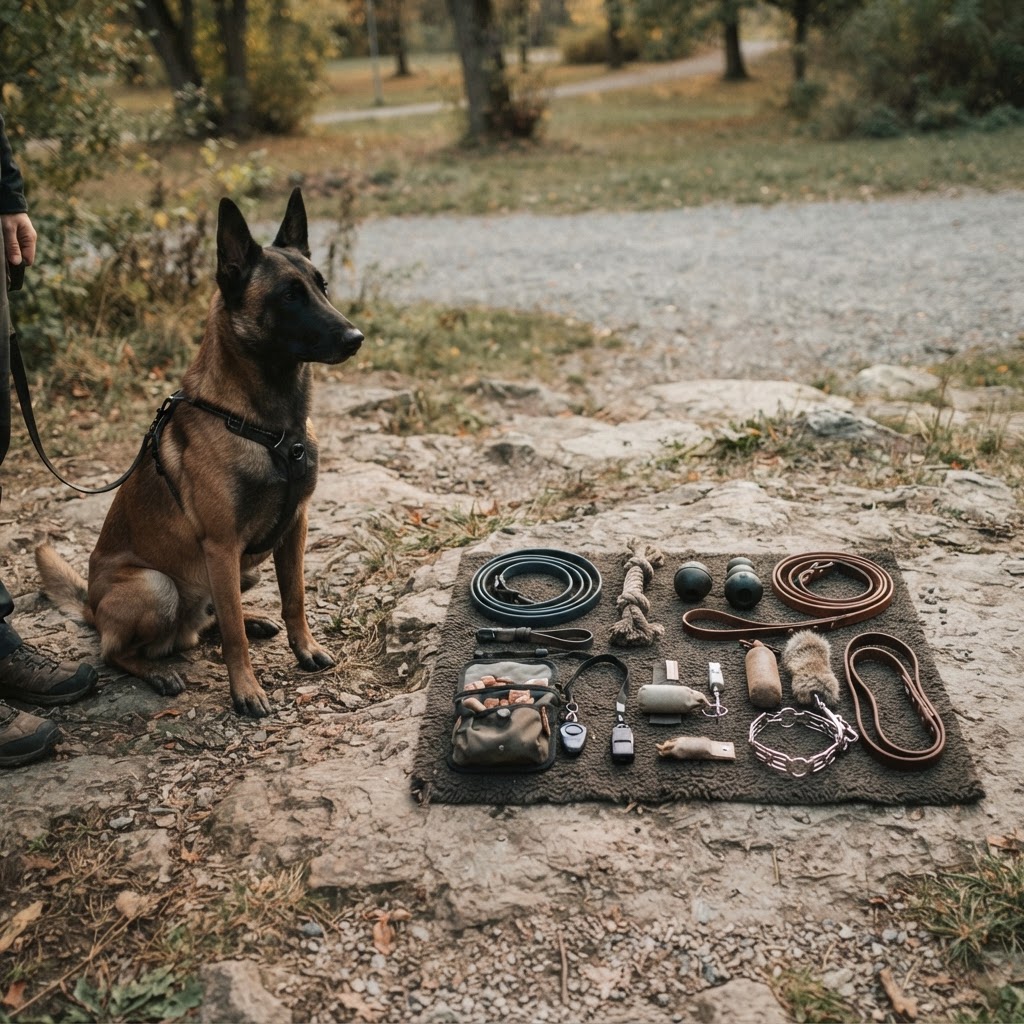
Harnesses
Front-Clip Harnesses
Also known as: No-pull harness, Front-attach harness
In Review — Pending Editorial ApprovalA harness with a leash attachment on the chest that can influence turning and reduce forward pulling leverage.
Want The Academy to remember what you've researched? Learn About Membership
At a Glance
- Equipment type
- Front-clip body harness
- Main purpose
- Pulling management and turning influence
- Construction
- Chest ring attachment, chest and girth straps
- Fit importance
- Important — shoulder clearance and chest placement
- Supervision level
- Standard
- Escape resistance
- Moderate — varies by design
- Main safety concern
- Twisting, rubbing, gait changes
- Common alternatives
- Y-front harness, standard leash, flat collar
Simple Definition
A front-clip harness is a harness with the leash attachment ring on the dog's chest rather than the back. When the dog pulls forward, the leash applies pressure from the front and side, which can influence the dog's direction and reduce forward leverage. Some front-clip harnesses also include a back-clip ring for dual-clip handling.
Common Uses
Front-clip harnesses are used as a management tool for dogs that pull on leash, for transitional loose-leash work, and for handlers who want additional control over direction and turning. They are sometimes called no-pull harnesses, though this term can be misleading — the harness manages pulling, it does not eliminate it.
How It Works
When the leash is attached to the front chest ring and the dog pulls forward, the leash extends from the chest rather than the back. This creates a pivoting effect — the dog's body turns slightly rather than driving straight forward. The handler can use this turning influence to redirect the dog and reinforce loose-leash positioning. The effect is mechanical — it does not teach the dog what to do.
Why Someone May Use It
A front-clip harness may provide additional management for strong dogs, support transitional loose-leash work, and offer dual-clip handling options. It can reduce the leverage a pulling dog has, making walks more manageable while training is in progress. It is a tool that creates the opportunity to reinforce loose-leash behaviour.
Why Someone May Avoid It
A front-clip harness may cause twisting or rubbing if poorly fitted. Some dogs show gait changes when wearing one. Overreliance on the harness without active leash training is a common mistake. Some dogs may find the chest ring uncomfortable or may learn to pull despite the front attachment. A front-clip harness should not be used without concurrent leash-training work.
Benefits
A front-clip harness can reduce forward pulling leverage, influence turning, and provide additional management for strong or excitable dogs. Dual-clip models offer versatile handling. When used alongside active training, it can support the development of loose-leash skills by creating manageable moments to reinforce.
Limitations
A front-clip harness may help manage pulling, but it does not teach loose-leash walking by itself. Some dogs develop gait changes or discomfort. Fit is critical — poor shoulder clearance or chest placement can cause rubbing or restricted movement. Overreliance without training leads to dependence rather than genuine skill.
Fit and Sizing
The chest strap should clear the shoulder joint. The front ring should sit on the chest, not too high on the throat or too low between the legs. Check that the harness does not twist when the dog moves. Ensure the girth strap is snug enough to prevent shifting. Monitor for rubbing during the first several uses, especially under the front legs and around the chest.
Safe Use
A front-clip harness may help manage pulling, but it does not teach loose-leash walking by itself. Check the fit regularly — poor fit can cause gait changes, rubbing, or discomfort. Do not use harsh corrections with a front-clip harness, as the chest attachment can create uncomfortable pressure. Inspect the ring, straps, and stitching for wear. Do not use for vehicle restraint unless specifically designed and tested.
Common Mistakes
- Using a front-clip harness without concurrent leash training
- Assuming the harness will eliminate pulling without training
- Fitting the chest ring too high on the throat or too low between the legs
- Using harsh leash corrections with a front-clip attachment
- Ignoring gait changes or discomfort during use
- Failing to check shoulder clearance
- Using a walking front-clip harness for vehicle restraint
Common Misconceptions
- Myth: A front-clip harness teaches loose-leash walking. Reality: It manages pulling — training teaches the skill.
- Myth: Front-clip harnesses are no-pull solutions. Reality: They reduce leverage; they do not eliminate pulling.
- Myth: A front-clip is always better than a back-clip. Reality: Each serves different purposes.
- Myth: Front-clip harnesses are safe for all dogs. Reality: Some dogs show gait changes or discomfort.
Who It May Suit
Front-clip harnesses may suit strong dogs that pull on leash, handlers working on transitional loose-leash skills, and dogs that respond well to the turning influence of a front attachment. They are a management tool best used alongside active training.
Who It May Not Suit
Front-clip harnesses may not suit dogs that show significant gait changes, dogs with sensitive chest areas, or handlers who rely on the harness without training. Some dogs learn to pull despite the front attachment. Dogs with specific shoulder or chest conformations may not fit front-clip designs well.
Alternatives
Care and Maintenance
Inspect the front ring, straps, and stitching regularly for wear. The front ring takes significant pressure and should be checked for stretching or loosening. Clean according to material. Replace if the ring shows signs of wear, straps fray, or buckles become unreliable.
Frequently Asked Questions
Sources and Review Notes
This guide was last reviewed in July 2026 by The Academy editorial team. Sources are pending verification. A front-clip harness may help manage pulling, but it does not teach loose-leash walking by itself. Always consult a qualified professional for guidance specific to your dog.
Academy Connections
Understanding this gear can also help you understand...
Every gear guide connects to other departments across The Academy.