
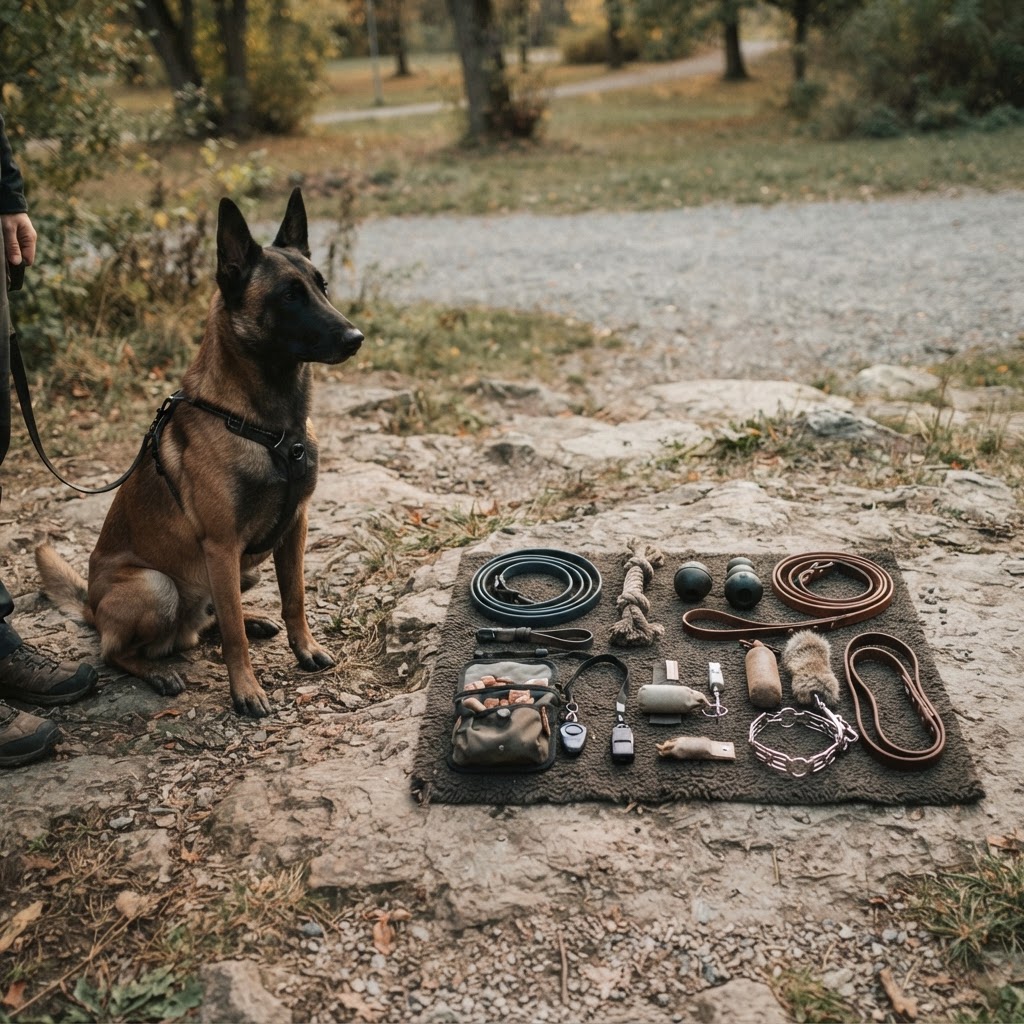
Collars
Slip Collars
Also known as: slip collar, slip chain, choke collar, training collar, rope slip collar, limited-slip collar
A slip collar is a loop-style collar that tightens when tension is applied and loosens when tension releases. It is neither inherently cruel nor inherently safe — fit, placement, and handler timing determine whether it is appropriate for a given dog and situation.
Want The Academy to remember what you've researched? Learn About Membership
At a Glance
- Item type
- Loop-style collar that tightens under tension
- Materials
- Rope, nylon, leather, or chain
- Designs
- Limited-slip and unlimited-slip variants
- How it works
- Tightens with tension, loosens on release
- Watch for
- Sustained tension, poor fit, escape risk, neck pressure
- Not for
- Brachycephalic, neck/spinal, heavy-pulling, or panic-prone dogs without guidance
- Intended use
- Release-based handling, not continuous pulling
- Risk if misused
- Medium to High
What It Is
A slip collar is a loop-style collar that tightens around the neck when tension is applied to the leash and loosens when the tension is released. It is commonly made from rope, nylon, leather, or chain. It is distinct from a slip lead, which combines a slip loop and a leash in one piece; from a martingale collar, which is a limited-slip collar with a fixed stopping point; from a flat collar, which does not tighten; from a choke chain, a metal slip collar with no stopping point; and from a head halter, which guides the head rather than applying neck pressure. Slip collars come in limited-slip designs (with a set tightest point) and unlimited-slip designs (with none).
Primary Purpose
The purpose is to provide clear pressure-and-release information through a collar that tightens with tension and loosens the moment tension is released. The intended use is release-based handling — brief, well-timed pressure that the dog can end by its own response — not sustained tension. The collar is often used for temporary handling, transport, and shelter, veterinary, grooming, or working contexts where a quick, secure fit is needed. It is neither inherently cruel nor inherently safe; its effect depends on fit, placement, and handler timing.
Common Uses
Slip collars appear in temporary handling and transport, and in shelter, veterinary, grooming, and some working contexts where a fast, secure, escape-resistant fit matters. Handlers use brief pressure-and-release moments to communicate, relying on the release to tell the dog it responded correctly. Used this way the collar is a communication tool; used with continuous pulling it becomes sustained pressure, which is not the intended release-based use and can increase risk.
When It May Be Useful
- Temporary handling and transport where a quick fit is needed
- Shelter, veterinary, or grooming contexts with escape-risk dogs
- Some working contexts under skilled handling
- Brief, well-timed pressure-and-release communication
- Situations where a secure, limited-slip fit helps prevent escape
Advantages
- Quick to apply and adjust
- Escape-resistant when fitted correctly
- Provides clear pressure-and-release information when timed well
- Available in limited-slip designs with a defined stopping point
Limitations
An unlimited-slip design has no fixed stopping point, so it can close far beyond what is safe. Sustained tension is not the intended release-based use and can create sustained neck pressure. Poor placement high on the neck or continuous pulling can increase risk to the trachea, cervical spine, airway, and — in some structures — even the eyes. Brachycephalic dogs, dogs with neck or spinal conditions, dogs that pull heavily, dogs prone to panic, and puppies may be poor candidates or require professional guidance. Escape risk remains if the collar is too loose, while pressure risk rises if it is too tight or used with continuous tension.
Fit, Setup or Placement
Fit the collar so it sits high on the neck, snug enough to prevent escape but not so tight as to rest closed. For limited-slip designs, confirm the stopping point allows a secure fit without excessive closure. Place the collar so the slip releases cleanly — an incorrectly oriented collar can bind instead of releasing. Check fit each time, since dogs and collars shift. If fit or handling is unclear, seek professional guidance before use.
Safe and Effective Use
Use brief, well-timed pressure and release — sustained tension is not the intended use and increases risk. Do not allow continuous pulling. Fit and place the collar correctly and check it each session. Supervise a dog wearing a slip collar, and remove it when unattended or during play with other dogs unless a professional has specified otherwise. Medical, respiratory, neck, eye, or spinal concerns should be discussed with a veterinarian before use. Seek professional guidance if fit, handling, or risk is unclear. The Academy is method-flexible. This equipment may be used within reward-based, balanced, mixed, or trainer-directed systems. No single item is required for all teams, and members may use the tools and methods they are comfortable and competent with.
Signs the Item Is Not Working Well
- The collar stays closed under sustained tension rather than releasing
- The dog coughs, gags, or struggles to breathe
- The dog slips free because the fit is too loose
- The dog becomes frantic or panic-prone under pressure
- The collar binds instead of releasing due to incorrect placement
Situations Where Another Option May Be Better
- Brachycephalic breeds, where a harness or head halter may be safer
- Dogs with neck, spinal, respiratory, or eye conditions (consult a veterinarian)
- Dogs that pull heavily and continuously
- Dogs prone to panic under pressure
- Puppies, where a flat or martingale collar is often more appropriate
Cleaning, Storage and Maintenance
Clean rope and nylon slip collars per the material guidance and dry fully to prevent odour and weakening. Inspect chain links, rope, leather, and hardware for wear, and check that the slip mechanism releases freely. Store so the loop is not crushed out of shape, and replace a collar whose slip binds, whose material is frayed, or whose hardware is worn.
Common Mistakes
- Using sustained tension instead of brief, released pressure
- Fitting too loose (escape) or too tight (excess pressure)
- Placing the collar so it binds instead of releasing
- Using an unlimited-slip design where a limited-slip or martingale is safer
- Using a slip collar for a dog with medical or structural concerns without guidance
Questions to Ask Before Buying or Using
- Is a limited-slip or unlimited-slip design appropriate for my dog?
- Can I fit and place the collar so it secures without excess pressure?
- Can I time pressure and release clearly, without continuous pulling?
- Does my dog have any medical, respiratory, neck, eye, or spinal concerns to discuss with a vet?
- Should I seek professional guidance before using this collar?
Practical Academy Takeaway
A slip collar is a release-based tool that tightens under tension and loosens on release — neither cruel by nature nor safe by default. Its effect is decided by fit, placement, and handler timing: brief, well-timed pressure that the dog can end itself is the intended use; sustained tension and continuous pulling are not. Some dogs and situations call for another option, and medical concerns belong with a veterinarian. When fit, handling, or risk is unclear, professional guidance is the right call.
Educational Limitation
This guide is educational, neutral, and method-flexible. It does not declare the slip collar cruel or safe. Fit, handling, and the dog's health determine appropriateness. For dogs with medical or behavioural concerns, a veterinarian and a qualified trainer can guide the decision.
Academy Connections
Understanding this gear can also help you understand...
Every gear guide connects to other departments across The Academy.