
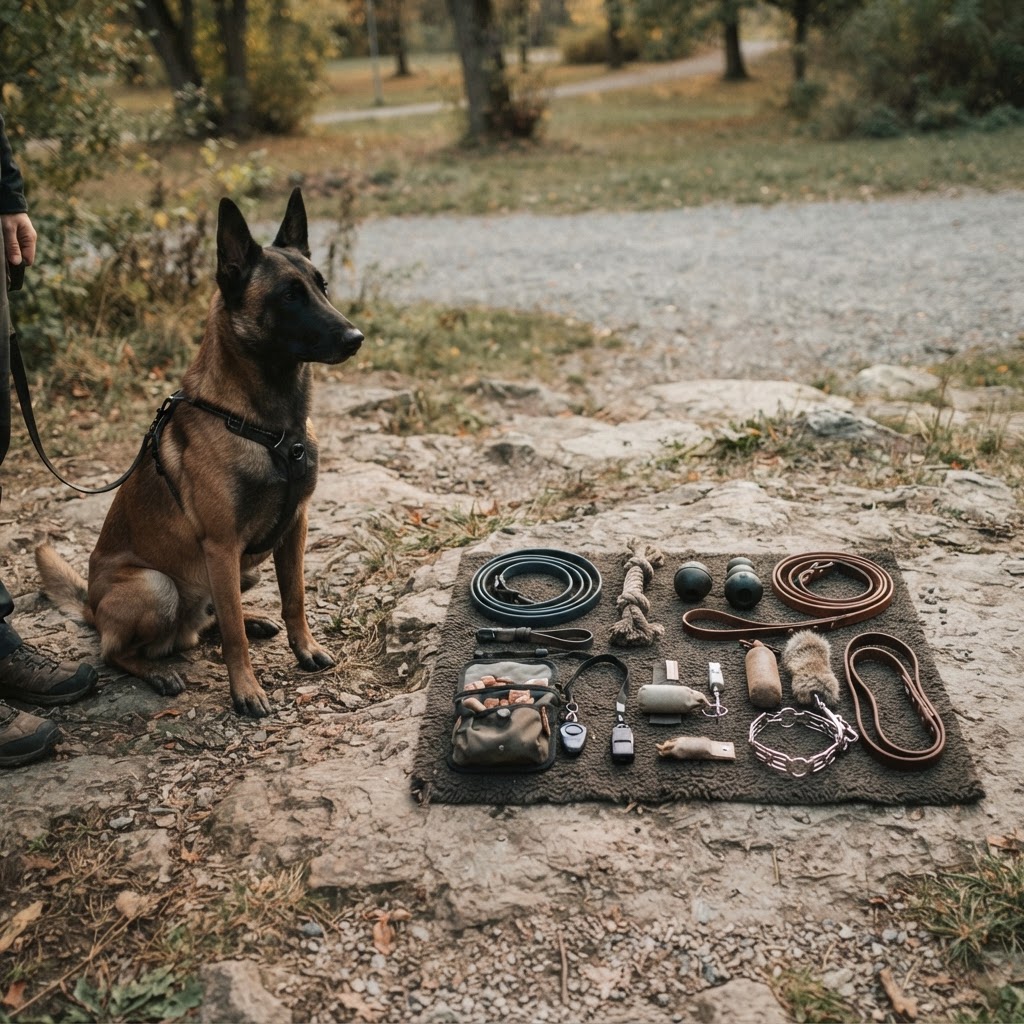
Training Equipment
Leash Tabs
Also known as: leash tab, short leash, traffic tab, drag tab, collar tab, training tab
A leash tab is a short handle attached to a collar or harness for close, supervised handling. It can make transitions easier than grabbing a collar, but it must never be left on unsupervised where snagging is possible and it is not a replacement for a full leash in public.
Want The Academy to remember what you've researched? Learn About Membership
At a Glance
- Item type
- Short handling tab attached to collar or harness
- Used for
- Close-position handling, supervised transitions, sport, household
- Key traits
- Length, material, handle loops, knots
- Watch for
- Drag risk, snagging, entanglement, chewing
- Never
- Leave attached unsupervised where snagging can occur
- Not a replacement for
- A full leash where laws or safety require one
- Risk if misused
- Medium
What It Is
A leash tab is a short length of leash, often with a handle loop or knot, attached to a collar or harness to give the handler a quick grip point for close work. It is distinct from a traffic handle, a short grab loop on a harness; from a house line, a longer indoor management line; from a drag line, a long line left to trail for distance work; from a standard leash, which is full-length for walking and control; and from a collar handle, which is built into a harness. A tab is for supervised, close-position handling.
Primary Purpose
The purpose is to provide an easier, safer grip than grabbing a collar directly during close handling, supervised transitions, training classes, sport setups, and household management. It is short on purpose, so it does not replace a full leash in public areas where leash laws or safety require one.
Common Uses
Handlers use tabs for close-position handling in training classes, sport setups, supervised transitions, and household management where a full leash would be in the way but a grab point is helpful. The tab is easier and safer to reach than a collar. Because it stays attached, however, it carries snagging and entanglement risk around furniture, crates, fences, brush, and other dogs.
When It May Be Useful
- Supervised close-position handling in classes or sport
- Transitions where grabbing a collar would be awkward or unsafe
- Household management under direct supervision
- Sport setups needing a short grab handle
- Work where a full leash is impractical but a grip point helps
Advantages
- A quick, safe grip compared with grabbing a collar
- Short length stays out of the way during close work
- Useful for supervised transitions and sport
- Lightweight and simple
Limitations
A tab is not a leash and must not be relied on where laws or safety require a full leash. Its main danger is that it stays attached: it can snag on furniture, crates, fences, brush, or other dogs, and it can be chewed. Entanglement can injure the dog. For these reasons a tab is for supervised use only and is generally removed in crates or confined spaces unless a qualified professional has specified otherwise.
Fit, Setup or Placement
Choose a length short enough to stay clear of the ground and surroundings during close work. Check the attachment clip is secure and rated for the dog. Position the tab so it does not dangle into the dog's legs. Decide in advance when the tab goes on and comes off, and make removal part of your routine before crating or leaving the dog unattended.
Safe and Effective Use
Never leave a tab attached unsupervised where snagging is possible. Remove it in crates or confined spaces unless a qualified professional has specified otherwise. Use caution around multiple dogs, as tabs can entangle. Do not rely on a tab where laws or safety require a full leash. The Academy is method-flexible. This equipment may be used within reward-based, balanced, mixed, or trainer-directed systems. No single item is required for all teams, and members may use the tools and methods they are comfortable and competent with.
Signs the Item Is Not Working Well
- The tab snags on furniture, crates, fences, or brush
- The dog chews or mouths the tab
- Entanglement occurs around other dogs
- The attachment clip feels loose or unreliable
- The tab is long enough to tangle in the dog's legs
Situations Where Another Option May Be Better
- Public areas, where a standard leash is required
- Distance work, where a long line or drag line fits
- Indoor management away from direct supervision, where a house line is safer
- Dogs that persistently chew attached tabs
Cleaning, Storage and Maintenance
Inspect the clip, stitching, and material for wear or chewing damage regularly. Clean per the material guidance. Store detached so it is not accidentally left on a dog. Replace a tab with a weakened clip, frayed stitching, or chew damage.
Common Mistakes
- Leaving the tab attached unsupervised
- Using a tab where a full leash is legally or safely required
- Choosing a length that tangles in the dog's legs
- Ignoring chew or clip wear
- Using a tab around multiple dogs without watching for entanglement
Questions to Ask Before Buying or Using
- Is the length short enough for close work without tangling?
- Is the clip secure and rated for my dog?
- Where and when will I attach and remove it?
- Can I supervise fully whenever it is on?
- Is a full leash actually required in this setting?
Practical Academy Takeaway
A leash tab is a short, supervised grip point that makes close handling safer than grabbing a collar — and nothing more. Its staying-attached design is both its convenience and its danger: it snags, tangles, and invites chewing. Use it only under supervision, remove it before crating or unattended time, and never treat it as a leash where a leash is required.
Educational Limitation
This guide is educational and method-flexible. Tab use carries real snagging risk. For sport or professional contexts, a qualified trainer can advise when a tab is appropriate and how to manage it safely.
Academy Connections
Understanding this gear can also help you understand...
Every gear guide connects to other departments across The Academy.