
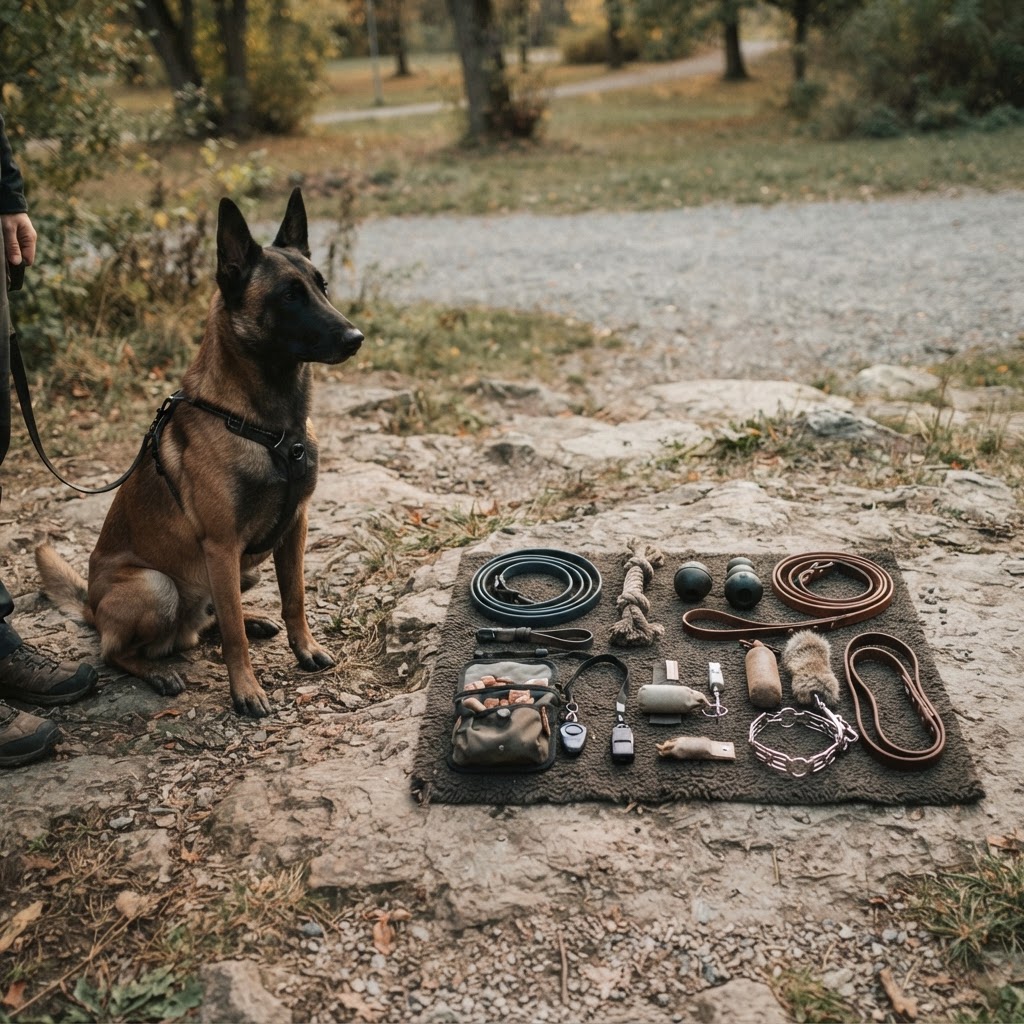
Training Equipment
Training Belts
Also known as: dog training belt, trainer belt, treat belt, utility belt, reward belt, dog-handler belt
A training belt is a waist-mounted, modular system for carrying rewards and accessories. It offers lighter organization than a vest, but a belt-mounted leash or tether can transfer force to the handler and must be used with care.
Want The Academy to remember what you've researched? Learn About Membership
At a Glance
- Item type
- Waist-mounted modular carrier
- Carries
- Treat pouches, toys, tugs, waste bags, clickers, bottles
- Attachments
- Leash points, loops, clips, holders
- Key traits
- Weight distribution, buckle security, fit, rotation
- Watch for
- Force transfer from belt-mounted leashes, pressure points, snagging
- Used in
- Classes, field work, hiking, sport, professional sessions
- Not a substitute for
- Handling skill and leash judgment
- Risk if misused
- Low to Medium
What It Is
A training belt is a waist belt with attachment points for a treat pouch, toys and tugs, a leash, a water bottle, waste bags, a clicker, and small accessories. It is distinct from a hands-free leash belt, which is built to anchor a leash to the handler's body; from a treat pouch, which is a single reward container; from a running belt, which carries personal items for exercise; and from a tactical or utility belt, which is general-purpose load-bearing gear. A training belt is a lighter, modular alternative to a full vest.
Primary Purpose
The purpose is to carry rewards and accessories at the waist for quick access with less bulk than a vest. Modular attachments let the handler configure the belt for the session. The belt does not replace handling skill — and if a leash is anchored to it, the belt becomes a load-bearing piece that can transfer force to the handler's body.
Common Uses
Handlers use training belts in classes, fieldwork, hiking, sport, and professional sessions to carry treat pouches, toys and tugs, waste bags, clickers, bottles, and small accessories. Some attach a leash to the belt for hands-free work. Weight distribution and buckle security keep the belt from rotating or shifting, and quick-access placement supports clean reward timing.
When It May Be Useful
- Sessions needing organization without a full vest
- Warm weather where a vest is too hot
- Active work where a lighter load matters
- Hands-free handling where a leash point is wanted (with safety caveats)
- Multi-reward sessions with modular attachments
Advantages
- Lighter and cooler than a full vest
- Modular attachments configure to the session
- Keeps rewards and accessories at waist level for quick access
- Less restrictive of shoulder and arm movement
Limitations
A belt carries less than a vest and concentrates weight at the waist, which can create pressure points or rotate during movement. Buckle security matters — a belt that opens or shifts can drop gear or change handling. Compatibility with winter clothing affects fit. Most importantly, a belt-mounted leash or tether can transfer significant force to the handler's body if the dog pulls, which is not always appropriate.
Fit, Setup or Placement
Fit the belt snugly at the waist or hips so it does not rotate under load, and check buckle security before each session. Place the treat pouch and most-used items where your hand lands naturally. If attaching a leash, choose an attachment rated for that force and position it where it will not interfere with leash handling. Test fit over winter clothing if you train in cold weather.
Safe and Effective Use
A belt-mounted leash or tether can create real force on the handler's body. Do not use one without considering the dog's size, pulling strength, the environment, and a reliable release option. Ensure attachments are secure so nothing swings or snags. Keep the belt from interfering with leash control. The Academy is method-flexible. This equipment may be used within reward-based, balanced, mixed, or trainer-directed systems. No single item is required for all teams, and members may use the tools and methods they are comfortable and competent with.
Signs the Item Is Not Working Well
- The belt rotates or shifts under load
- Buckle or attachments feel insecure
- A belt-mounted leash transfers uncomfortable force when the dog pulls
- Pressure points develop during longer sessions
- Accessories snag on the leash or surroundings
Situations Where Another Option May Be Better
- Carrying a large kit, where a training vest organizes better
- Dogs that pull hard, where a belt-anchored leash is risky
- Cold-weather layering that makes waist fit difficult
- Sessions needing only a treat pouch, with no belt at all
Cleaning, Storage and Maintenance
Clean food residue from pouches and clips regularly. Inspect buckles, attachment loops, and leash points for wear, especially if you anchor a leash. Store with attachments detached where possible, and replace a belt whose buckle or leash point shows wear.
Common Mistakes
- Anchoring a leash without considering pulling force and release options
- Letting the belt rotate so items are unreachable
- Overloading until pressure points develop
- Using a worn buckle or leash attachment point
- Letting accessories swing and snag the leash
Questions to Ask Before Buying or Using
- Does the belt fit snugly and stay put under load?
- Are the buckle and leash attachment point rated and secure?
- Which attachments do I need for my sessions?
- Will it fit over my winter clothing if relevant?
- If I anchor a leash, can my dog's pulling force be managed safely?
Practical Academy Takeaway
A training belt is a light, modular way to carry rewards and accessories at the waist — a cooler, less restrictive alternative to a vest. Its one serious caveat is force: a belt-mounted leash can transfer the dog's pull to the handler's body, so weigh size, strength, environment, and release options before using one. Otherwise, fit it snugly, secure your buckles, and keep it uncluttered.
Educational Limitation
This guide is educational and method-flexible. Belt and hands-free setups vary widely in safety. For dogs that pull strongly or for sport-specific hands-free work, a qualified trainer can help choose and fit a safe system.
Academy Connections
Understanding this gear can also help you understand...
Every gear guide connects to other departments across The Academy.